

Close

The recorded course. Start today.
Twelve hours of teaching across 28 videos, covering all twelve Special Group schools of Carnival 2026: what each school paraded, the history and the music behind every theme, how a samba school is built across the year, and how the judging works.
Pre-recorded and taught in English. Watch whenever you like, at your own pace, with no schedule to keep up with. Includes the 120-page ebook, sold separately at €35, and the playlists of Brazilian music behind the themes.
€120. Access begins as soon as you pay.
Rio Carnival Masterclass 2026: Dive Deep into Brazilian Culture & Samba!
This comprehensive program dives into the rigorous organizational and logistical mechanisms of the desfile, covering everything from the internal structure of a samba school, the purpose of the Quadra and Barracão, the intense year-round production cycle, and the specific rule changes and judging criteria implemented for Carnival 2026. The course will also show the basic characteristics of each bateria of all the samba schools. By mastering the inner workings of the parade, you will gain an enhanced appreciation for the monumental creative and logistical effort behind the competition.
Beyond the spectacle, this masterclass provides unparalleled access to the depths of Brazilian culture, music, and history. The course meticulously analyzes the themes (enredos) of the competing Special Group schools, allowing you to explore key cultural movements like MPB (Música Popular Brasileira), the Manguebeat, and traditional Afro-Brazilian faiths such as Candomblé. You will study the legacies of pioneering figures, from the transgressive rocker Rita Lee and the revolutionary writer Carolina Maria de Jesus to the pioneering sambista Heitor dos Prazeres. By connecting the parades to narratives of Afro-Brazilian resistance (like the Bembé do Mercado), spiritual traditions (like Ifá Lucumí), and regional artistic identity (like Maracatu), this course ensures you grasp the profound societal and artistic value embedded within the history and performance of Carnival.
Course Information
– All classes are pre-recorded, and you can watch them whenever you want.
– The course, taught in English, is open to participants worldwide.
– Your purchase gives you full access to the complete course.
– Additionally, all participants will receive a 120 pages ebook (worth €35) containing detailed course materials.
– Participants will have access to an exclusive playlist of Brazilian music related to the themes covered in the course.
Price: €120
Program:
Lesson 1: The Anatomy of a Samba School Parade
1. Organizational Structure of a Samba School: This segment explains the leadership roles, including the President and Patron, and the creative positions, such as the Carnavalesco and Mestre de Bateria.
2. The Quadra: A central space serving as a rehearsal venue, social hub, and center for cultural preservation rooted in Afro-Brazilian traditions.
3. The Barracão: The creative workshop and production hub where skilled artisans construct the massive floats (carros alegóricos) and elaborate costumes (fantasias).
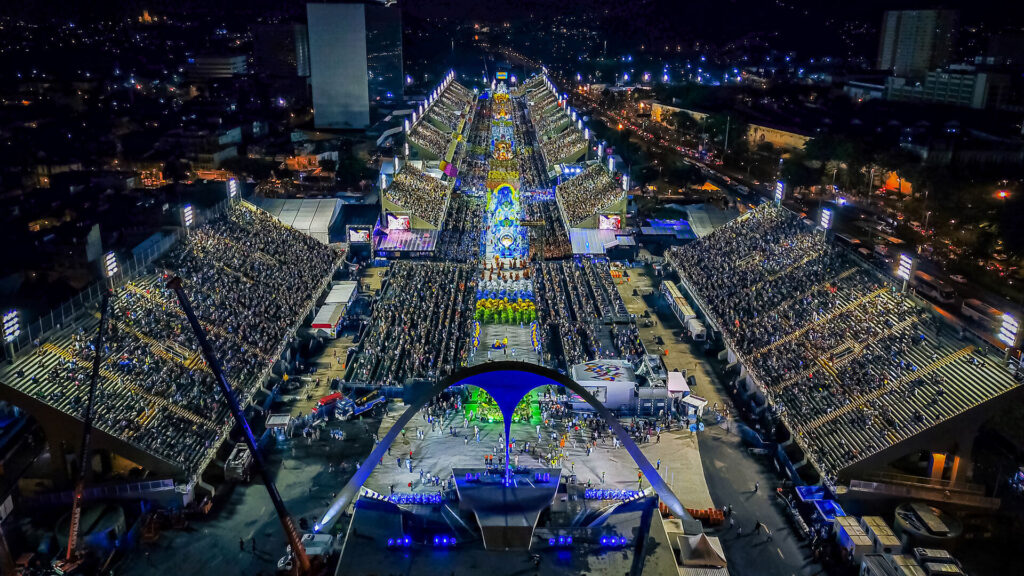
4. The Sambadrome: The 700-meter-long stadium, designed by Oscar Niemeyer, that is transformed into the official, dedicated parade route.
5. The year-round preparation: Covers the comprehensive cycle from evaluating the previous year to selecting the enredo and intensifying production and technical rehearsals.
6. The Day of the Parade: Explains the crucial logistics of the “Concentração” assembly area, where participants and floats gather and are organized by alas (sections).
7. Key Sections of the Parade: Reviews essential components like the Comissão de Frente (opening group), the Bateria (percussion ensemble), the Ala das Baianas (traditional section), and the Alegorias (floats).
8. The Judging Process: Delves into the complex scoring system based on nine distinct criteria (quesitos), such as Bateria, Harmonia, and Evolução, scored from 9.0 to 10.0 points.
9. Changes to the Judging Process for Carnival 2026: Analyzes the restructuring of the jury, the increase in judges from 36 to 54, the new draw process for final scores, and the justification requirement for scores of 10.
Lesson 2: Carnival 2026 Themes – Day 1
1. Academicos de Niteroi: Presents a biographical narrative honoring President Lula da Silva, tracing his journey from the impoverished Northeast to union leadership and the presidency. The basic characteristics of its bateria will be explained.
2. Imperatriz Leopoldinense: Explores the “Chameleonic” theme, celebrating the transgressive performer Ney Matogrosso as a hybrid figure who contested moral standards and military dictatorship rules. The basic characteristics of its bateria will be explained.
3. MPB: Defines Música Popular Brasileira as a hybrid genre that emerged from Bossa Nova, fusing sophistication with Brazilian root music, often functioning as a form of political resistance.
4. Portela: A mystical exploration of Afro-Gaúcho identity, centering on Príncipe Custódio and the Negrinho do Pastoreio to challenge national Black history narratives. The basic characteristics of its bateria will be explained.
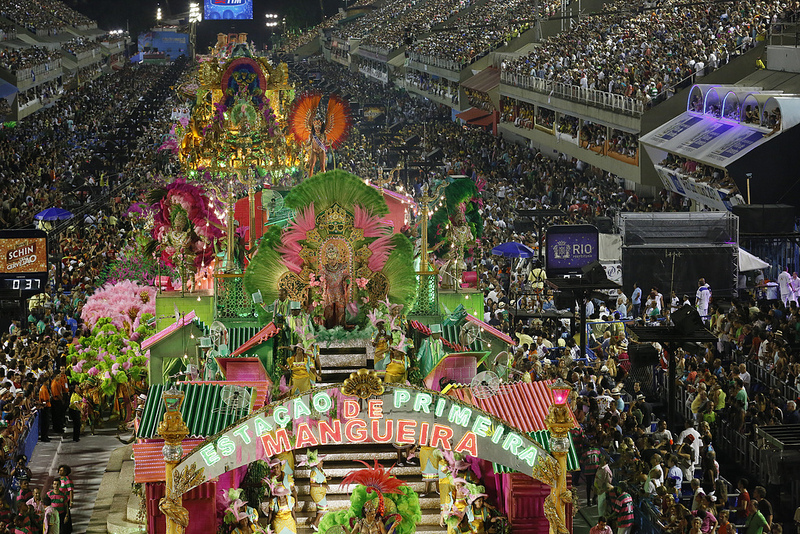
5. Mangueira: Celebrates the Afro-Indigenous traditions of Amapá (the “Black Amazon”), invoking the spiritual entity Mestre Sacaca as the Xamã Babalaô who guides the epic Amazonian saga. The basic characteristics of its bateria will be explained.
Lesson 3: Carnival 2026 Themes – Day 2
1. Mocidade Independente: A “rockcarnaval” tribute to Rita Lee, the “Patroness of Freedom,” celebrating her role as a transgressive rock avant-garde pioneer who fought gender stereotypes. The basic characteristics of its bateria will be explained.
2. Beija-Flor: Focuses on Bembé do Mercado, recognized as the largest street Candomblé, commemorating the Abolition of Slavery and serving as an act of Afro-Brazilian resistance and cultural affirmation. The basic characteristics of its bateria will be explained.
3. Candomblé: Provides historical context on this Afro-Brazilian religion, explaining its origins in the cultural heritage of enslaved Africans and its function as a resistance movement.
4. Santo Amaro da Purificacao: Explores this recognized center of Afro-Brazilian culture and history in the Recôncavo Baiano, known as the birthplace of Samba de Roda and influential artists like Caetano Veloso and Maria Bethânia.
5. Viradouro: A monumental tribute to Mestre Ciça, the school’s legendary mestre de bateria, celebrating his over 50 years in Carnival, rhythmic innovations, and audacious parade elements. The basic characteristics of its bateria will be explained.
6. Unidos da Tijuca: Honors the Black literary icon Carolina Maria de Jesus, structuring the parade as a book of five “chapters” to affirm her identity as the “writer who was favelada” and exalt her critical work Quarto de Despejo. The basic characteristics of its bateria will be explained.
Lesson 4: Carnival 2026 Themes – Day 3
1. Paraíso do Tuiuti: Focuses on Ifá Lucumí, tracing the ancient Yoruba divinatory oracle’s journey and redevelopment through the Lucumí culture in Cuba before consolidating in Brazil. The basic characteristics of its bateria will be explained.
2. Vila Isabel: Presents a tribute to multi-artist Heitor dos Prazeres, celebrating his role as a pioneer of samba, coiner of the term Pequena África, and visual artist who captured Afro-Brazilian life. The basic characteristics of its bateria will be explained.
3. Grande Rio: Dives into “The Mangrove Nation,” exploring the history and cultural hybridism of the Manguebeat movement (Recife, 1990s), using the mangrove as a symbol of resistance against social exclusion. The basic characteristics of its bateria will be explained.
4. Maracatu: Defines this African-origin cultural manifestation from Pernambuco, characterized by rhythm, dance, and religious ritual, differentiating between the royal procession of Maracatu Nação and the rural Maracatu Rural.
5. Salgueiro: A profound homage to Rosa Magalhães, the greatest champion of the Sambadrome era, translating her genius and rigorous historical research into an imaginative, ludic carnival journey. The basic characteristics of its bateria will be explained.
Immerse yourself in the vibrant, pulsating heart of Rio de Janeiro’s Carnival 2026 with our exclusive online course. Designed for enthusiasts, travelers, and culture aficionados, this course offers an unparalleled deep dive into one of the world’s most spectacular cultural events.
@leoqueiroz
Unveil the Magic of Samba Schools
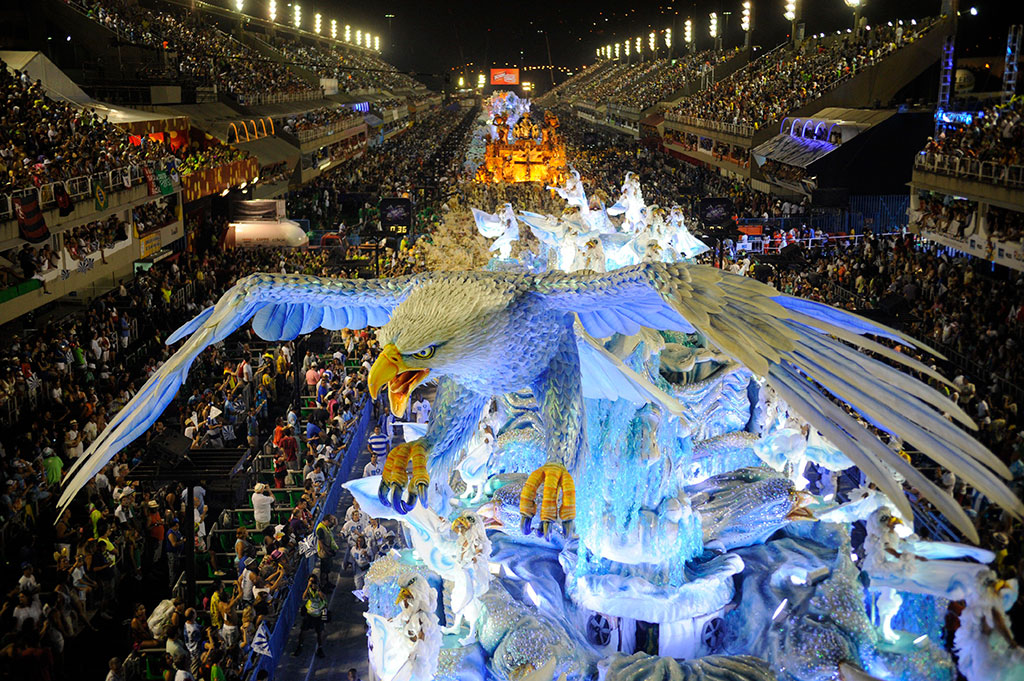
At the core of Rio’s Carnival are the legendary samba schools, each a powerhouse of creativity, tradition, and passion. Our course meticulously dissects the intricate structure of a samba school parade, giving you insider knowledge of every element—from the commanding Front Committee to the elegant Masters and Flag Bearers, from the dazzling floats to the energetic wings of dancers. You will gain a profound understanding of how these elements converge in a spellbinding display of artistry and rhythm that captivates millions.
Master the Art of Carnival Judging
Ever wondered how the best samba schools are crowned in this fierce competition? Our course provides a detailed breakdown of the judging criteria, ensuring you grasp the nuances that separate a good performance from an award-winning spectacle. You will learn about the various judged items, from the choreography and costumes to the storyline and overall harmony. This insight will allow you to appreciate the parade not just as a spectator but as an informed critic.
Marco Antônio Cavalcanti
Fernando Frazão / Agência Brasil
Explore the Themes of All First Division Samba Schools
Each samba school in Rio’s prestigious first division presents a unique storyline that draws from Brazil’s rich tapestry of history, culture, and folklore. In this course, you will delve into the themes of all the first division samba schools for Carnival 2026, uncovering the inspirations behind their narratives. We will explore the historical events, legends, and cultural icons that inspire these performances, giving you the knowledge to fully appreciate the depth and creativity behind each school’s presentation.
Gabriel Lopes has been a prominent figure in Brazilian music and Rio’s Carnival culture since the early 2000s. Combining his roles as a seasoned musician, educator, and researcher, Gabriel has dedicated his career to preserving, teaching, and celebrating the rich traditions of samba school baterias.
Gabriel’s deep expertise as an educator is exemplified by his work with prestigious music institutions such as the Royal College of Music and the Royal Birmingham Conservatoire, where he led workshops in 2019, 2023, and 2024. In 2023, he brought his unique approach to the Conservatorium van Amsterdam, and in 2024, he conducted workshops at Trinity School in Croydon.
His ability to engage and inspire students, coupled with his extensive experience in high-profile educational settings, underscores his standing as a respected authority in Brazilian percussion.
As a researcher and author, Gabriel has made significant contributions to the understanding of samba and samba school baterias. His published works include Mestre Dudu – As Paradinhas da Não Existe Mais Quente, As Bossas do Mestre Maurão, and Fundamentals of a Samba School Bateria.
These bilingual books not only document the evolution of samba rhythms but also provide practical tools for musicians worldwide, featuring audio examples and musical notation for paradinhas and bossas. Through these publications, Gabriel preserves the legacy of samba school drumming while making it accessible to a global audience.
As a performer, Gabriel has toured extensively with the renowned percussion group Monobloco, captivating audiences across Brazil, the USA, Europe, and Japan. His dynamic performances and integral contributions to Monobloco’s sound have solidified his reputation as a leading figure in the global samba scene. With Monobloco, he recorded two albums and two DVDs, contributing to the group’s dynamic legacy.
Gabriel also played in Rocinha’s bateria for over a decade and has been a proud member of Vila Isabel’s bateria since 2019, specializing in the repique drum. As a composer, he achieved a career milestone by entering his samba composition into Mangueira’s competition in 2016.
From 2005 to 2019, Gabriel served as the mestre de bateria for Volta Alice, a carnival group (bloco) that became a cornerstone of Rio Carnival, attracting tens of thousands of revelers.
He has also taught at Monobloco’s workshops, preparing students for parades in Rio de Janeiro, Belo Horizonte, and São Paulo. His teaching extends internationally, with workshops held across the UK, Europe, the USA, Japan, Korea, and Taiwan, both in-person and online.
Through his brand, Samba Beats, Gabriel continues to share his passion for samba school baterias. His website, YouTube channel, and social media platforms provide a wealth of educational content, including tutorials, historical insights, and detailed analyses of samba rhythms. His dedication to teaching and research reflects his mission to preserve and celebrate the cultural and musical heritage of Brazil.
Gabriel Lopes offers an unparalleled blend of practical expertise, academic research, and teaching excellence. His work not only connects audiences to the vibrant world of samba but also inspires the next generation of percussionists worldwide.

Suggestions? Complaints? Need any help? Want to know about percussion classes? Arrangements for you group? Send us a message!